| Acert by Cat |
Andrew Norton headed to the US for a firsthand look at Caterpillar’s acert technology
Cat out of the bag
Caterpillar is the world’s largest manufacturer of diesel engines, with more than 500,000 units sold each year. Established in 1925, it currently employs more than 80,000 people directly, with a worldwide dealer network of 182. The annual sales are almost AU$36.5 billion.
The marine division, known as Caterpillar Marine Power Systems, is headquartered in Hamburg, Germany, where medium-speed heavy fuel oil MaK Motoren diesels (the company was acquired in 1997) are built. Caterpillar also owns the Perkins factory in Peterborough, UK, which manufactures smaller diesels and gensets using a mix of CAT and Perkins technology.
But Peoria, Illinois in the US is Caterpillar’s headquarters for highway, construction/earthmoving, commercial and pleasureboat diesels that operate on distillate, and this is where the C-Series of marine diesels are concepted, designed, and evaluated. The research and development facility is at Mossville and the straight-six C10 to C18 engines are cast at Mapleton, both a short drive from Peoria.
TOUR OF DUTY
Shortly after the release of CAT’s ACERT low-emission, diesel engine technology at the 2006 Sanctuary Cove Boat Show, Phil Canning from Energy Power Systems, the Australian distributor of CAT marine engines, discussed with me the benefits of the ACERT components. After a lengthy phone conversation, Phil decided the best way for me to gain a thorough understanding of how ACERT functions was to get me to the Mossville head office to tour all of the company’s engine manufacturing facilities.
As part of the negotiations for me to tour the office, there had to be an agreement that the engines I saw being evaluated at the Mossville R&D facility would not be discussed in print until they were officially released. In early July, I flew with Garry Dann, Energy Power’s Queensland sales manager, to Peoria to tour the facilities.
After an exhaustive two days of touring the Mapleton foundry and the Mossville head office I was able to appreciate the attention to detail in the R&D facility, the foundry, and the engine assembly lines, and the way in which CAT operates its business.
For example, CAT only builds engines against firm orders. This minimises stockpiling and improves profitability because the majority of diesels ordered are customised according to the customer’s requirements.
At the Mossville Technical Centre, engines are concepted, designed and evaluated through several trial stages. Trial engines are tested for maximum power and torque outputs using dynamometers to simulate varying load conditions while meeting ever-stringent US and EU exhaust emission requirements.
They are tested for reliability in all ambient temperatures, from desert conditions (CAT supplies engines to Haliburton for Iraq) to Arctic and Antarctic climates.
Engines undergo thousands of hours of evaluation before being released on the world markets, and some units I saw being evaluated won’t be released until 2008.
Located alongside the Illinois River, the Mapleton foundry casts blocks and cylinder heads using separate moulds for each engine. The sand for the moulds comes from the banks of the Illinois River while the resin used (the ingredients remain a secret) comes from a company specialising in casting moulds. Upper and lower moulds are used for both the cylinder blocks and heads and are baked to 300 degrees, with a final microwave heat to ensure consistent grain throughout the moulds. When touched, these have a slightly sandy feel.
The foundry has a viewing gallery over the ladles and pouring lines for the grey iron, so we were able to see firsthand the process of pouring into the moulds, similar to the ‘lost foam’ technique used by some outboard engine manufacturers. The sand/resin mix vaporizes, leaving a fine grain cast iron. The residual black sand is used for landfill.
When the castings have cooled they are picked up and shaken from the steaming sand/resin slag, then cooled for a day and, if needed, sanded, ready for shipment to the Mossville assembly plant. CAT’s reputation for high quality casting is well known in the engine industry and the company casts blocks and heads for V8 petrol racing engines used on the Nascar circuit.
Back at Mossville, CAT utilises assembly teams whereby a handful of workers assemble one engine at a time. The working conditions were very good and the cleanest of any engine manufacturer I’ve toured. From an engineering viewpoint the way the engines were assembled, such as using special tools to insert pistons in the cylinders, was a real eye-opener compared to other production techniques I’ve seen. The forged pistons don’t have traditional skirt designs, reducing weight and stresses on the conrods and crankshaft.
Forged by a specialist supplier, the crankshafts are heated to 800 degrees, then cold-water quenched for two minutes to improve hardness and longevity. Once assembled, each engine is subjected to a ‘cold test’ in which, without firing it up, the engine is run to 600rpm to check for harmonic balance and oil pressure.
ACERT
Originally developed for on-highway diesels to meet tough new exhaust emission regulations, CAT ACERT encompasses four main areas of technology. The first is fuel delivery. CAT uses ‘microburst’ technology whereby fuel is injected in up to five short bursts before top dead centre (TDC), with the main spray occurring at TDC. The fuel is injected using either hydraulic electronic unit injectors (for larger engines) or electronically-controlled mechanically-actuated unit injectors) at pressures of up to 22,400 to 23,800psi.
The next area of technology employed by ACERT is CAT’s ADEM electronic engine management system, which optimises the air/fuel ratios and spray timing according to barometric pressure and engine load.
The third is air management, including variable valve timing on the intake valves and/or series turbocharging using a combination of high and low pressure turbochargers to avoid the need for either variable geometry turbocharger vanes or a mix of supercharging and turbocharging, both of which CAT deems as unnecessarily complex.
The fourth is a combustion chamber designed to maximise air/fuel burn efficiency to help produce power and torque while remaining within emission requirements.
Fortunately all CAT ACERT marine engines meet US EPA Tier 2 requirements scheduled for implementation in 2007, without needing variable valve timing or series turbocharging.
Engines with ACERT technology in the Caterpillar recreational marine diesel range include: the C7, which develops 455hp at 2800rpm;
the C9, which develops 567hp at 2500rpm;
the C12, which develops 705hp at 2300rpm;
the C15, which develops up to 853hp at the same revs;
and the C32, which develops a whopping 1800hp, also at 2300rpm.
In comparison, the existing C32 develops 1651hp at the same revs.
For more details on the CAT ACERT range, contact
Garry Dann
at Energy Power Systems
on (07) 3722 1400,
or email Garry.Dann@energypower.com.au
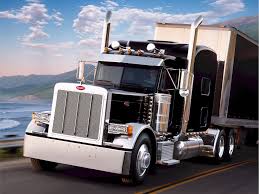 After purchasing his truck with a Caterpillar C15 engine eight months ago, OOIDA Life Member Lee Strebel of Peachtree City, Ga., says it has been a financial nightmare trying to keep his 2007 Peterbilt out of the shop and on the road. “It’s been a problem almost since day one,” Strebel told Land Line on Monday, May 4. […]